

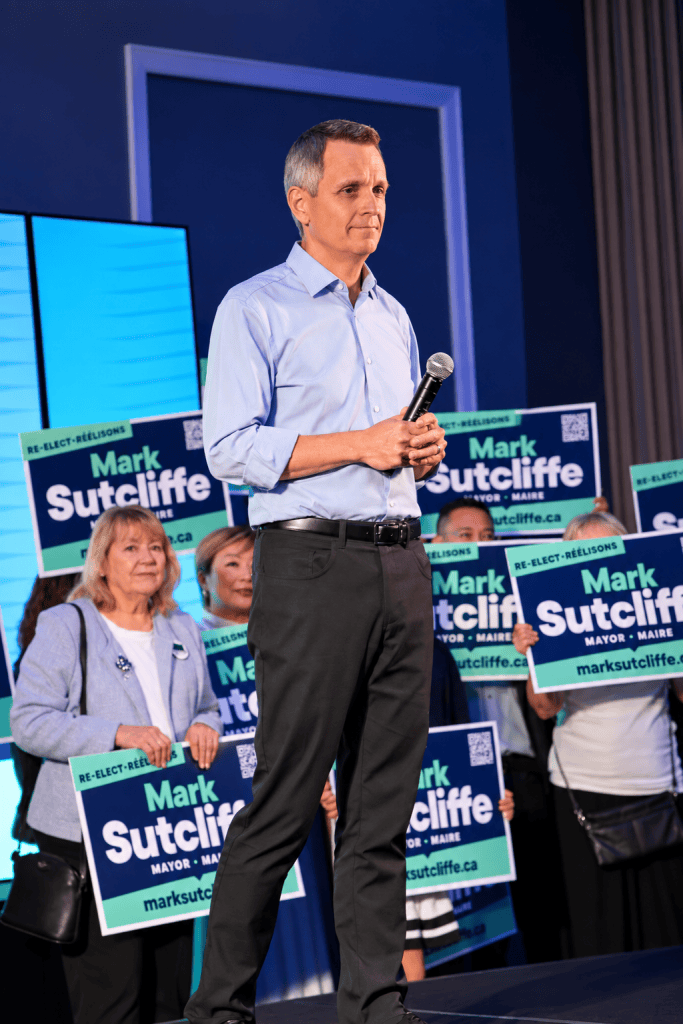
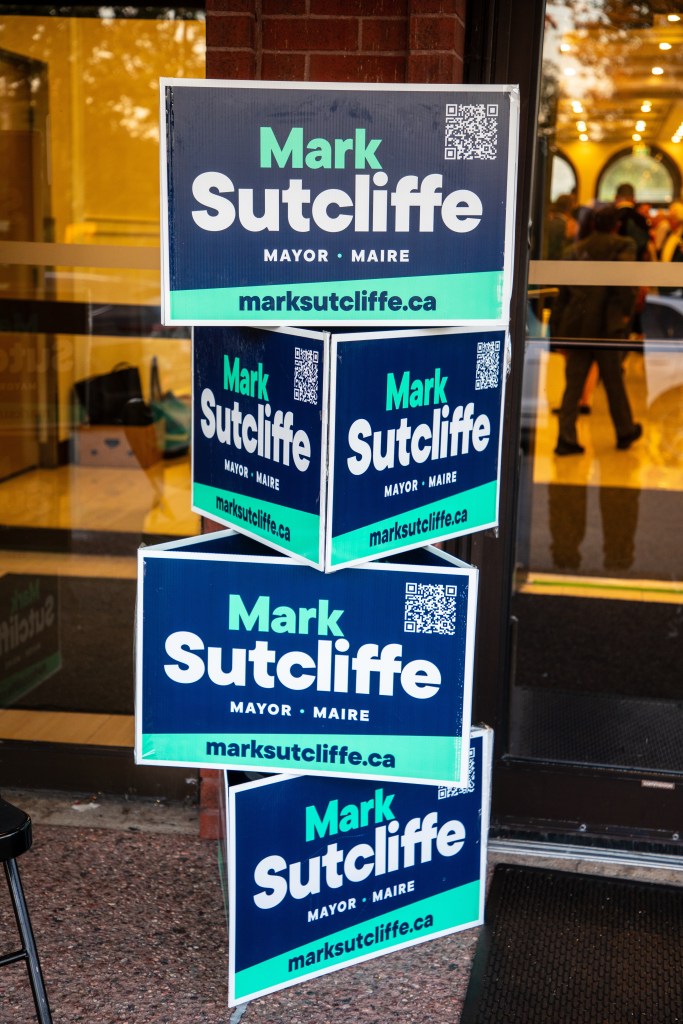
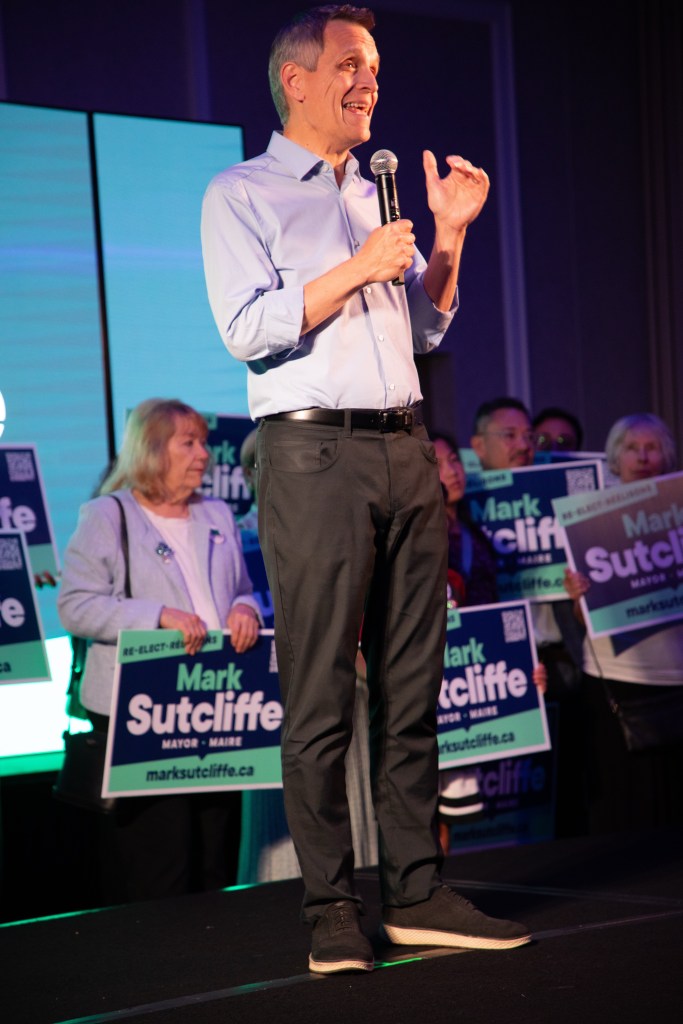
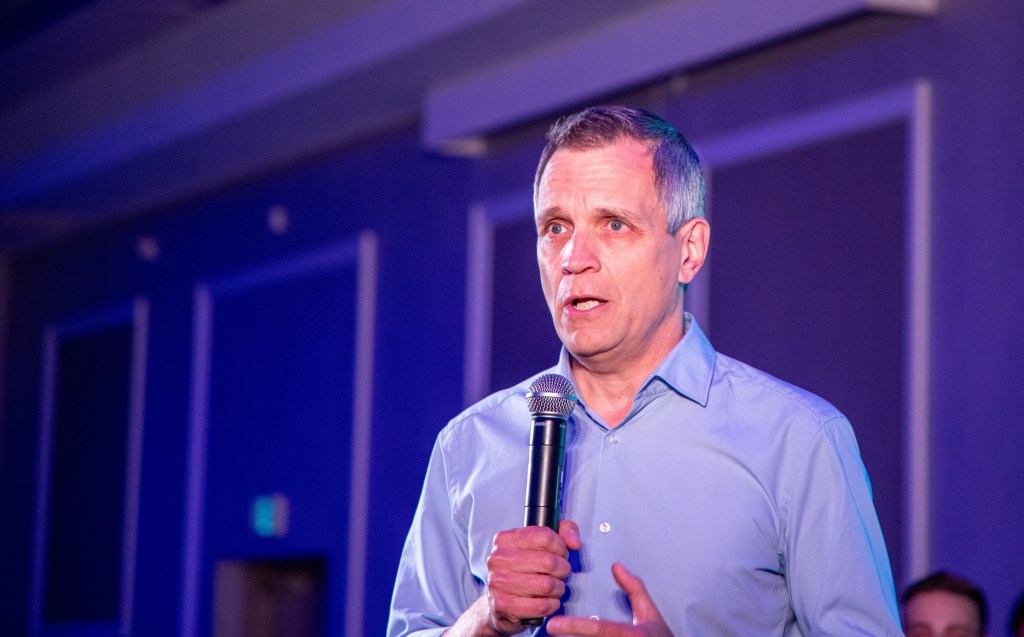
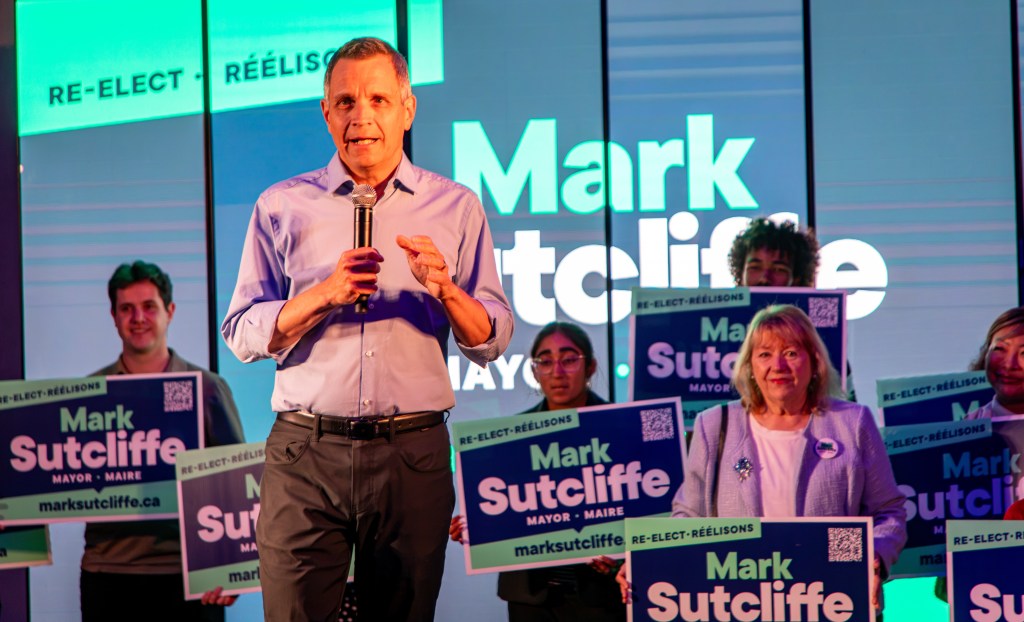
I was invited to attend the 2026 campaign kickoff for Mark Sutcliffe’s run for Mayor. Should he prevail at the polls, it would be his second term.
Given the nastiness that comes with the job—and just how high our expectations of a mayor have become—I respect Mark even more for running again.
The daily exposure to the cesspool of troll content is frankly sickening. That’s a subject for another day. Social media certainly isn’t statistical research, but it does influence perception. Read enough negative comments and you can easily begin to believe everyone feels the same way.
There are a lot of troubled keyboard warriors out there.
Full disclosure: I’ve known Mark for more than 10 years. We worked together at Rogers Radio, where he hosted an excellent daily talk show on the now-defunct 1310News.
He’s a family man first and foremost. He’s professional, well-read, well-spoken and very smart. His remarkable network of contacts in Ottawa made him a great talk-radio host and writer, and he and his producers were able to recruit many high-profile and credible guests.
The show was never boring. It was interesting, intelligent and focused primarily on the listener and the City of Ottawa.
I don’t know exactly when Mark decided he wanted to run for Mayor, but I’m sure he did his homework and ultimately made the decision because he thought he could help at City Hall.
A rookie politician at any level has his work cut out for him.
But Mayor?
Wow.
Shields up, Captain.
I’m not smart enough—or frankly interested enough—to do a forensic examination of every decision Mark has made during his first term. Suffice it to say that he has maintained a high profile in the community and has continually advocated for improving the quality of life of Ottawa residents.
Talk about carrying the weight of the world.
Ottawa is also a very unique city, and honestly, it isn’t an easy place to govern.
It’s complicated.
Being the nation’s capital brings with it an expectation that Ottawa should look and function like a world-class capital. The federal government spends enormous amounts of money through the National Capital Commission maintaining and beautifying the National Capital Region.
And, being honest, I mostly support those efforts. The city SHOULD be beautiful. It’s Canada’s capital.
But it creates an interesting contrast. The NCC can spend federal dollars creating beautiful national spaces while the municipality still has to collect property taxes, plow the streets, fill the potholes and repair the roads.
Then there is the federal workforce.
To no one’s surprise, it is an enormous influence on Ottawa’s economy. Roughly one in five Ottawa workers is employed in public administration, compared with about 6% nationally.
Those jobs tend to be relatively well paid and stable, with good benefits and—here comes the big one—PENSIONS!!!
Even when the federal government is reducing its workforce through attrition, early retirement or workforce-adjustment programs, much of that economic influence doesn’t simply disappear. A retiring federal employee may stop collecting a salary, but he or she may remain in Ottawa collecting a pension, owning a home and spending money in the community.
No judgment from me. It’s simply economic reality.
The private sector, while healthy in many respects, cannot always compete with those employment opportunities—particularly when salary, benefits, pensions and job security are considered together.
But regardless of who signs your paycheque, we all shop in the same housing market.
If you’re 60 years old and bought an Ottawa home 30 years ago, chances are its increasing value has feathered your nest nicely. Many of those houses are now mortgage-free or close to it, with enormous equity.
If you’re 25 or 30 and working in the private sector, it’s a very different world.
When we moved to Ottawa in 1999, we paid $235,000 for a beautiful house in Stittsville. We were shocked at the value compared with the GTA.
In August 2026, the median Ottawa residential sale price was about $622,000.
There is zero chance wages have increased at anything approaching the same rate.
There’s your housing affordability problem.
Then there’s homelessness.
Ottawa unquestionably has a serious problem. Providing shelter is difficult enough. Addressing the underlying reasons people become and remain homeless is infinitely more complicated.
Housing affordability. Addiction. Mental illness. Income instability. Family breakdown.
Some of those responsibilities belong to the city. Others primarily belong to the province or federal government. Many overlap.
And yet the person standing at the podium answering questions about what people see on Ottawa streets is very often the Mayor.
Most—not all—of Ottawa’s largest homeless services are concentrated in or around the downtown core and ByWard Market. These organizations do incredible work, with tremendous community support, helping people who desperately need it.
But that concentration also affects an area that is supposed to be one of Ottawa’s premier destinations for residents and tourists. Homelessness, addiction, mental-health crises and associated disorder all contribute to concerns about safety and the perception—and sometimes reality—of increased crime.
Policing that environment is no easy task.
And Ottawa is hardly alone. Virtually every major Canadian city is wrestling with versions of the same problem.
Now let’s call this next one exactly what it is.
Transit in Ottawa is a catastrophe.
No doubt.
Light rail was being contemplated decades ago and became a serious planning exercise in the 1990s. One of its fundamental purposes was to solve the growing problem of moving an enormous number of buses through downtown Ottawa.
What followed was years of plans, cancelled plans, tunnels, construction, questionable procurement decisions and disruption that ultimately culminated in the system we have today.
No one living in Ottawa needs reminding how much transit construction has disrupted our lives.
My God!!!
It feels like the nightmare that never ends.
Will it eventually bear fruit? I hope so. But it’s difficult to imagine fare revenue ever paying for the system, meaning property taxpayers will continue subsidizing transit—as they do in virtually every major city.
And then, just as Ottawa finally opened the Confederation Line in September 2019, along came this little pandemic thingy.
Six months later, downtown Ottawa emptied.
Mandatory work-from-home orders cratered transit ridership and blew an enormous hole in OC Transpo’s finances. Buses that had once carried federal workers downtown every morning were suddenly running nearly empty.
One of the more frustrating sights during that period was watching empty buses continue along basically the same routes until service could eventually be adjusted.
Ridership has improved substantially since then, but it remains well below 2019 levels.
And here is the problem that may never completely go away: Ottawa built much of its transit system around transporting enormous numbers of downtown workers five days a week.
Many of those people no longer commute five days a week.
That isn’t Mark Sutcliffe’s fault. It isn’t Jim Watson’s fault. Nobody planning Ottawa’s transportation system 10 or 20 years ago could reasonably have predicted a worldwide pandemic that would fundamentally change where people work.
So no, living in Ottawa isn’t perfect.
And being Mayor of Ottawa certainly isn’t easy.
In fact, I think it may be one of the most thankless jobs around.
Running a city isn’t like running a business. There is far more involved than balancing the books and turning a profit. Municipal government has to raise an appropriate amount of revenue from homeowners and businesses while making difficult decisions about how that money is spent for the benefit of everyone.
Roads. Transit. Police. Fire. Paramedics. Recreation. Housing. Garbage. Infrastructure.
Everybody wants excellent services.
Nobody particularly enjoys paying for them.
I think Mark has done a commendable job considering the obstacles he faced and the problems he inherited.
That doesn’t mean every decision has been right. It doesn’t mean Ottawa doesn’t have serious problems. And knowing Mark personally doesn’t make him a good mayor simply because I know him to be a good person.
But I also think many of the complaints directed at him involve problems that no Mayor of Ottawa—regardless of political philosophy—could solve alone.
I appreciate Mark’s thoughtful, consensus-building style.
He’s also one of the nicest men I know.
I realize being nice or popular doesn’t necessarily translate into being a good leader. But character still matters to me.
Mark is a Canadian and acts like one.
Decent.
This whole blog actually began because I wanted to share some photographs from Mark’s campaign kickoff, so I’ll finish with those.
And regardless of whom you choose in the upcoming municipal election, make sure you vote.
Because if you don’t vote, you lose the right to that poison-pen opinion of yours.










 Danny Kingsbury